A writing workshop, without walls.
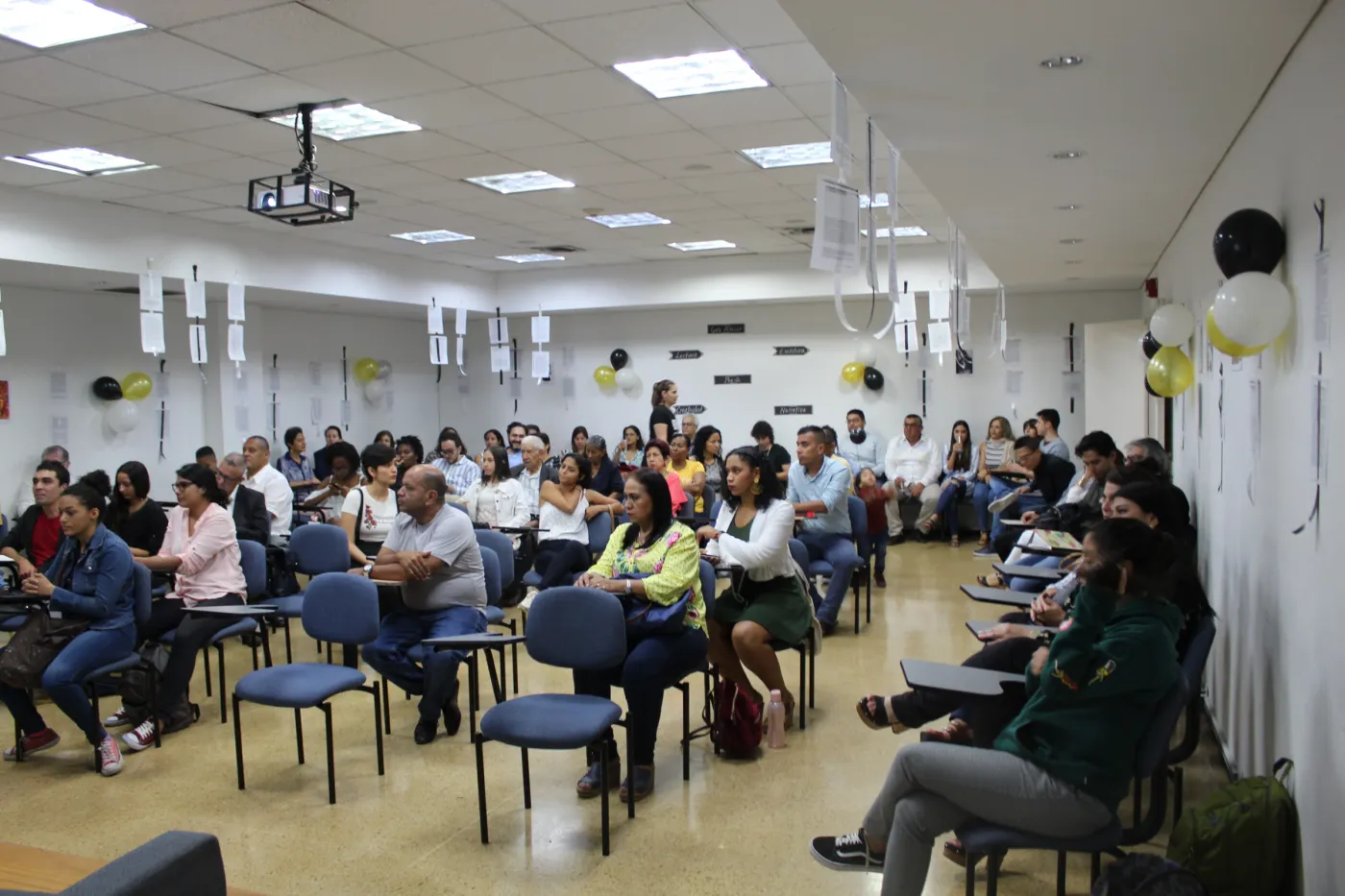
Altazor started as a small group meeting in the Departmental Library of Cali. I partnered with its founder, Gabriel Rodríguez, to turn a deeply personal workshop into a digital school — without losing what made it work.
Results
- 100+Students published in literary magazines and independent presses
- 95%Course completion rate
- 4.8 / 5Student satisfaction
- ~10Workshops a year, plus master classes and open sessions
01 Research
An online course would have failed.
The landscape was informal literary circles, university extension courses and a few private tutors. Nobody offered a structured, long-term programme that was both accessible and of high literary quality.
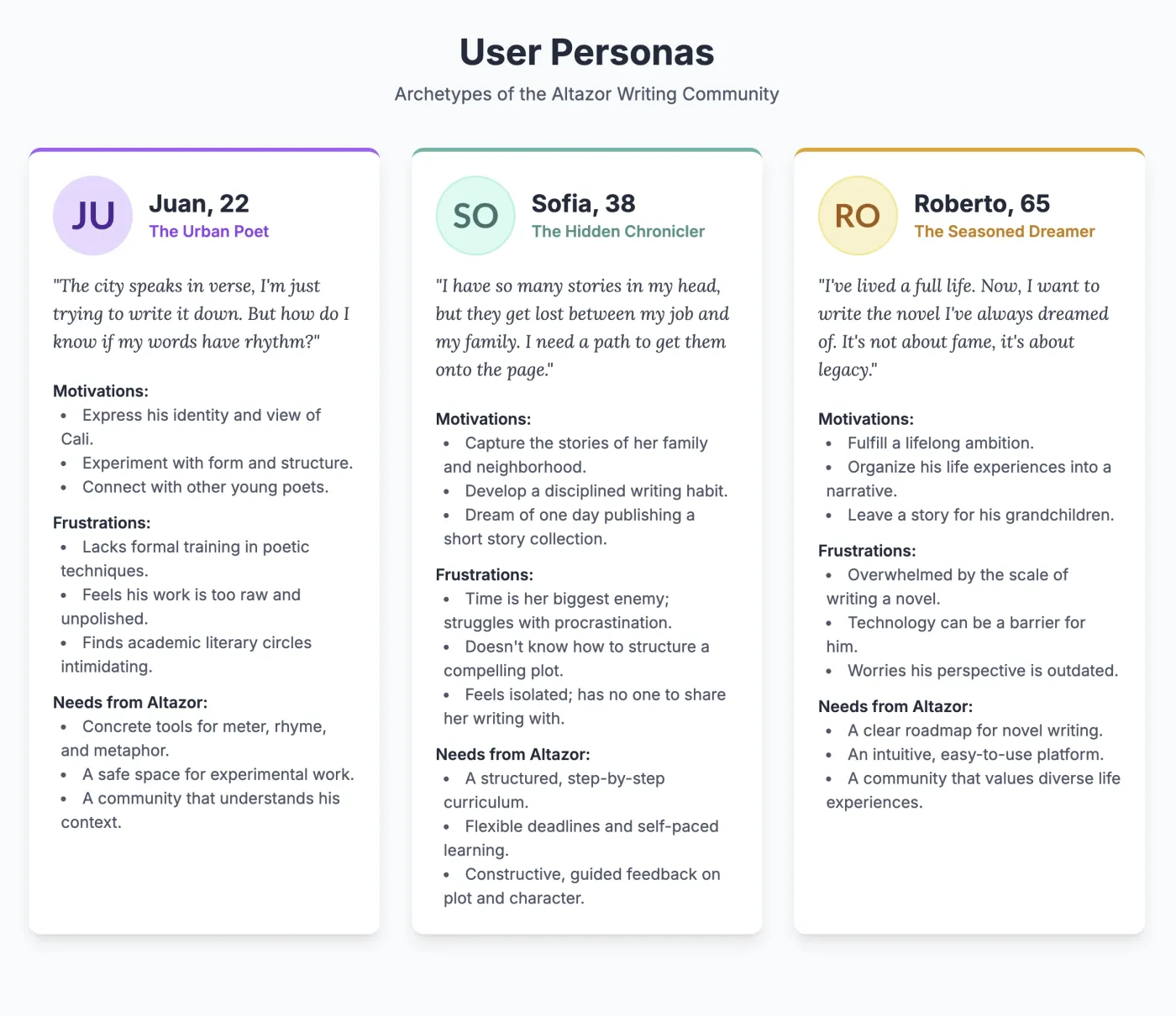
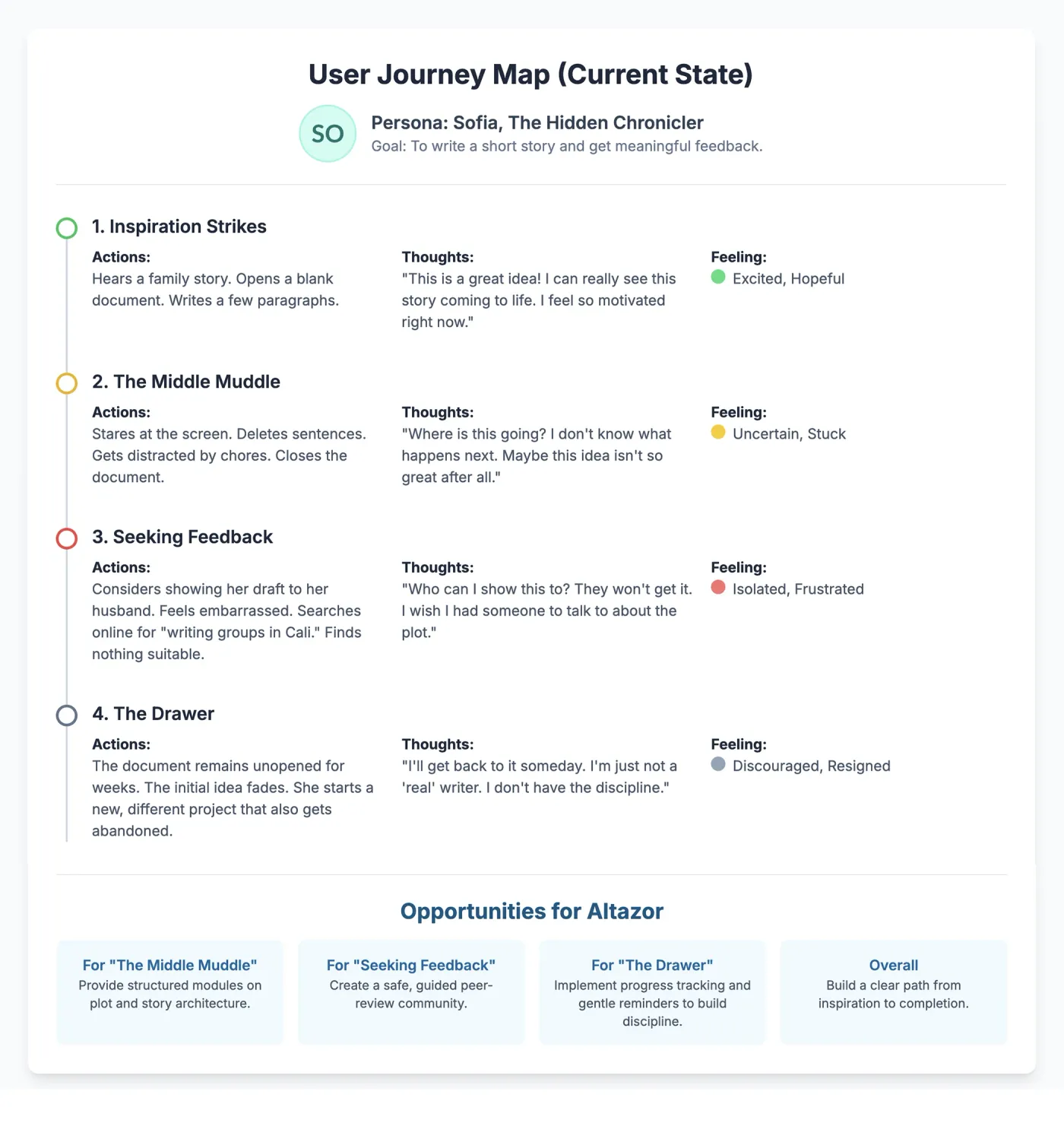
I interviewed 15 aspiring writers. Technique was not their main need. They wanted:
Validation
A safe place to share work without harsh, unstructured criticism.
Community
Peers, so writing feels less lonely.
Discipline
A clear path that gets them past procrastination and the blank page.
Place
Cali’s rhythm and identity reflected in what they learn.
So the brief became a taller literario online — as alive as the room, with the benefits of digital tools.
02 Strategy & content
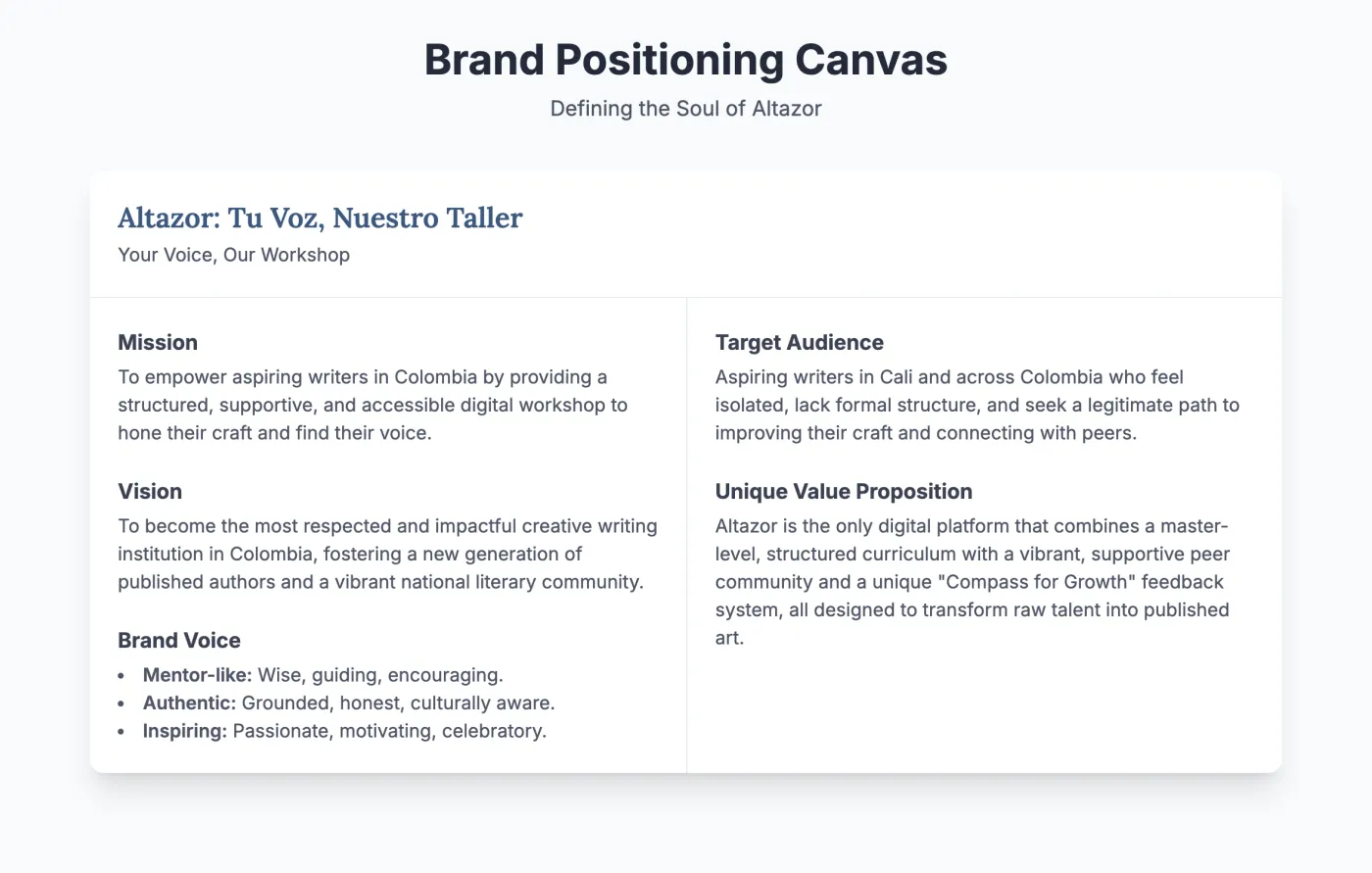
“Tu voz, nuestro taller.”
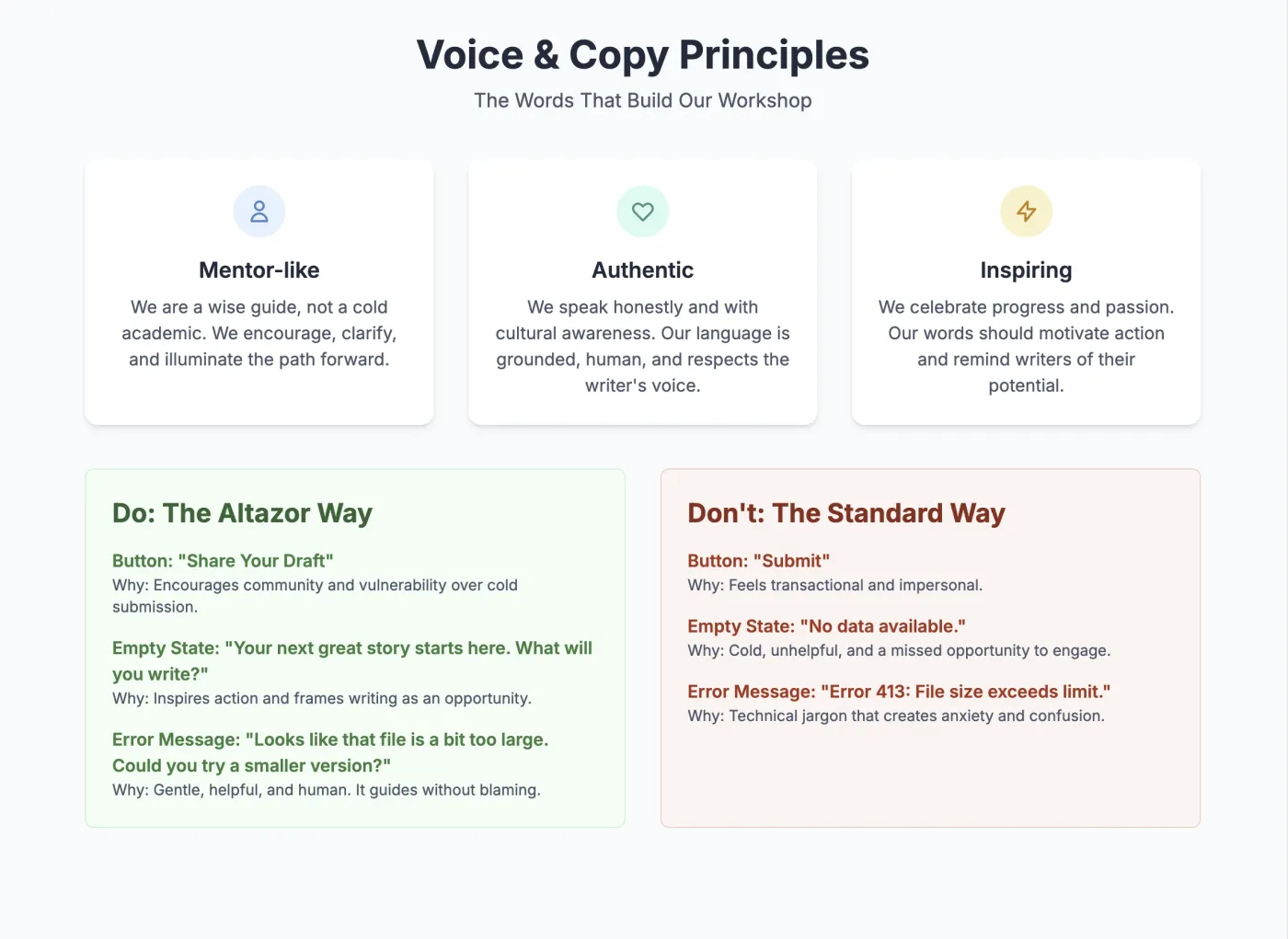
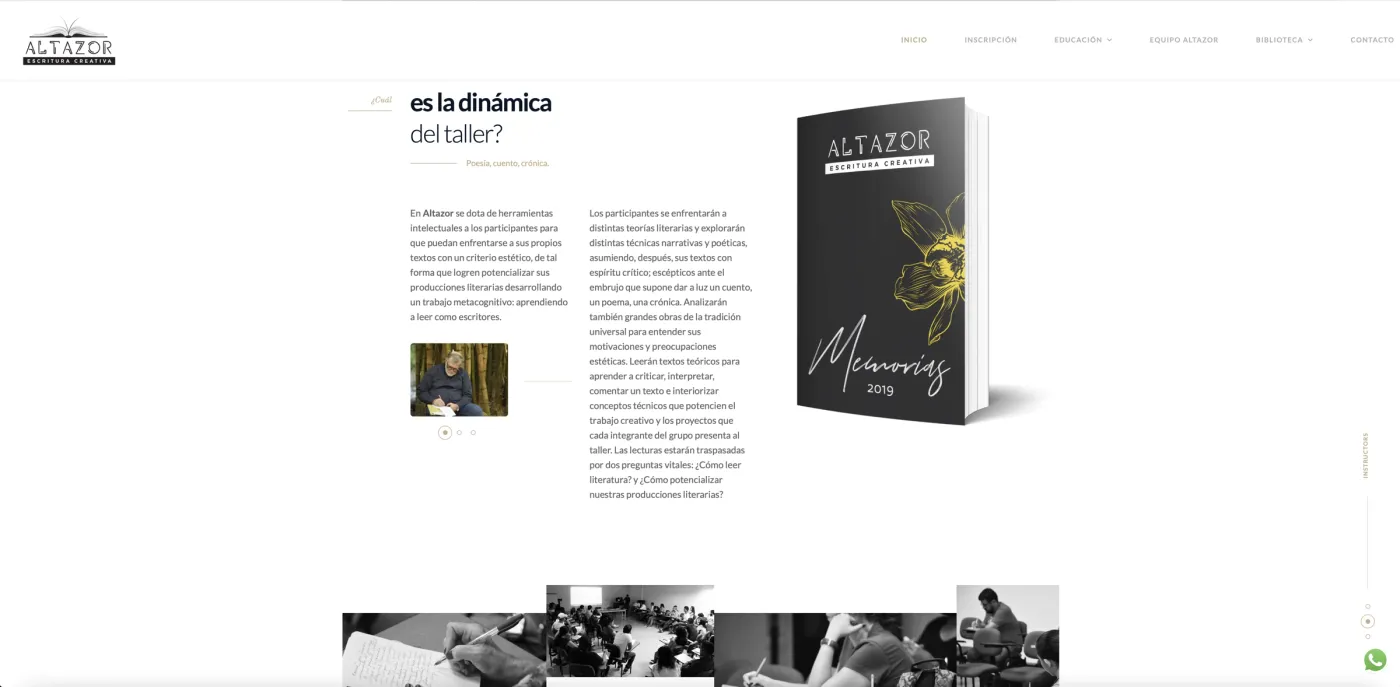
The positioning: not a rigid school but a shared space that honours each writer’s voice and gives them master-level tools. Three pillars guided every decision, down to the wording of a button — local authenticity with international quality, community as a feature, and content as conversation.
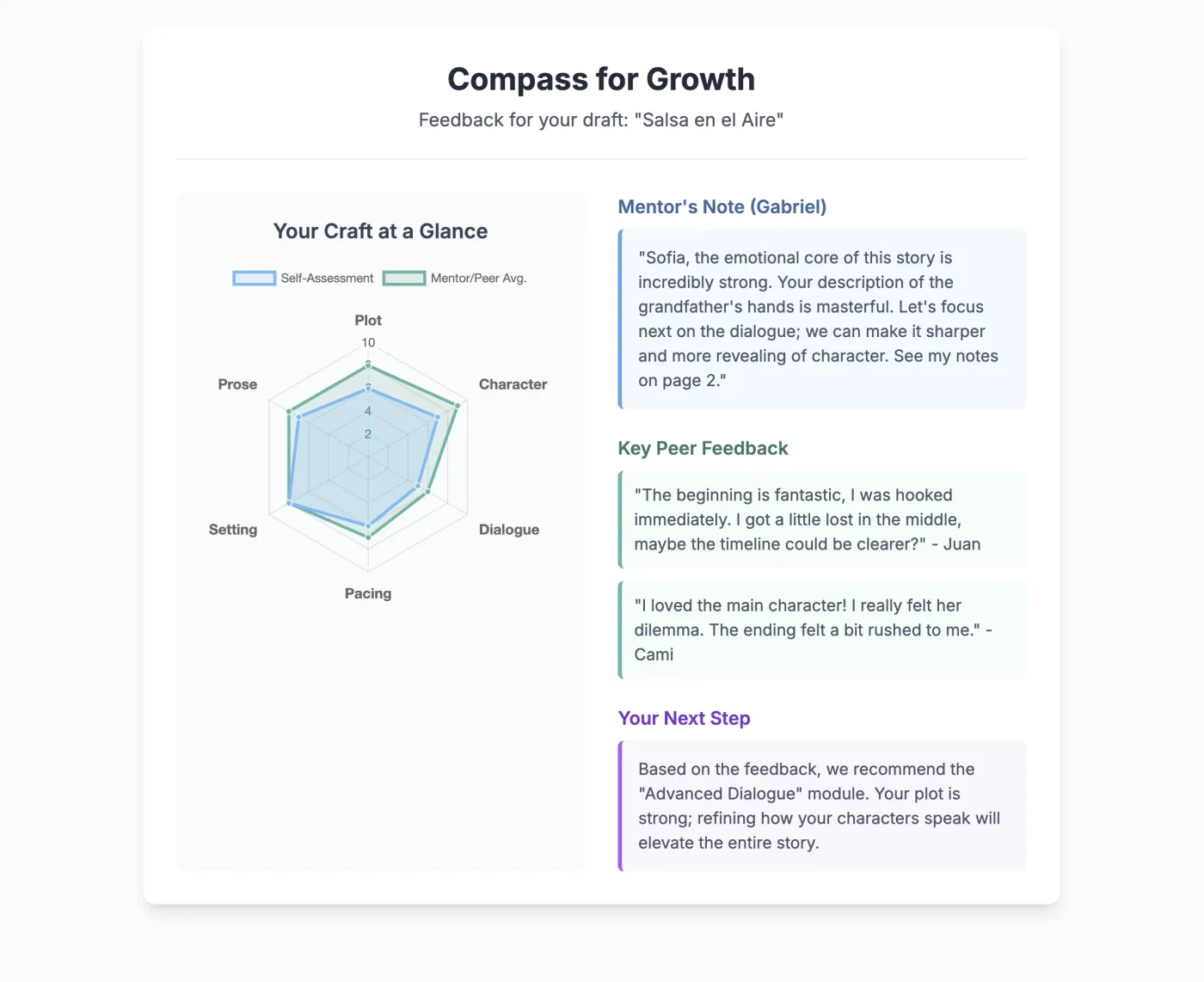
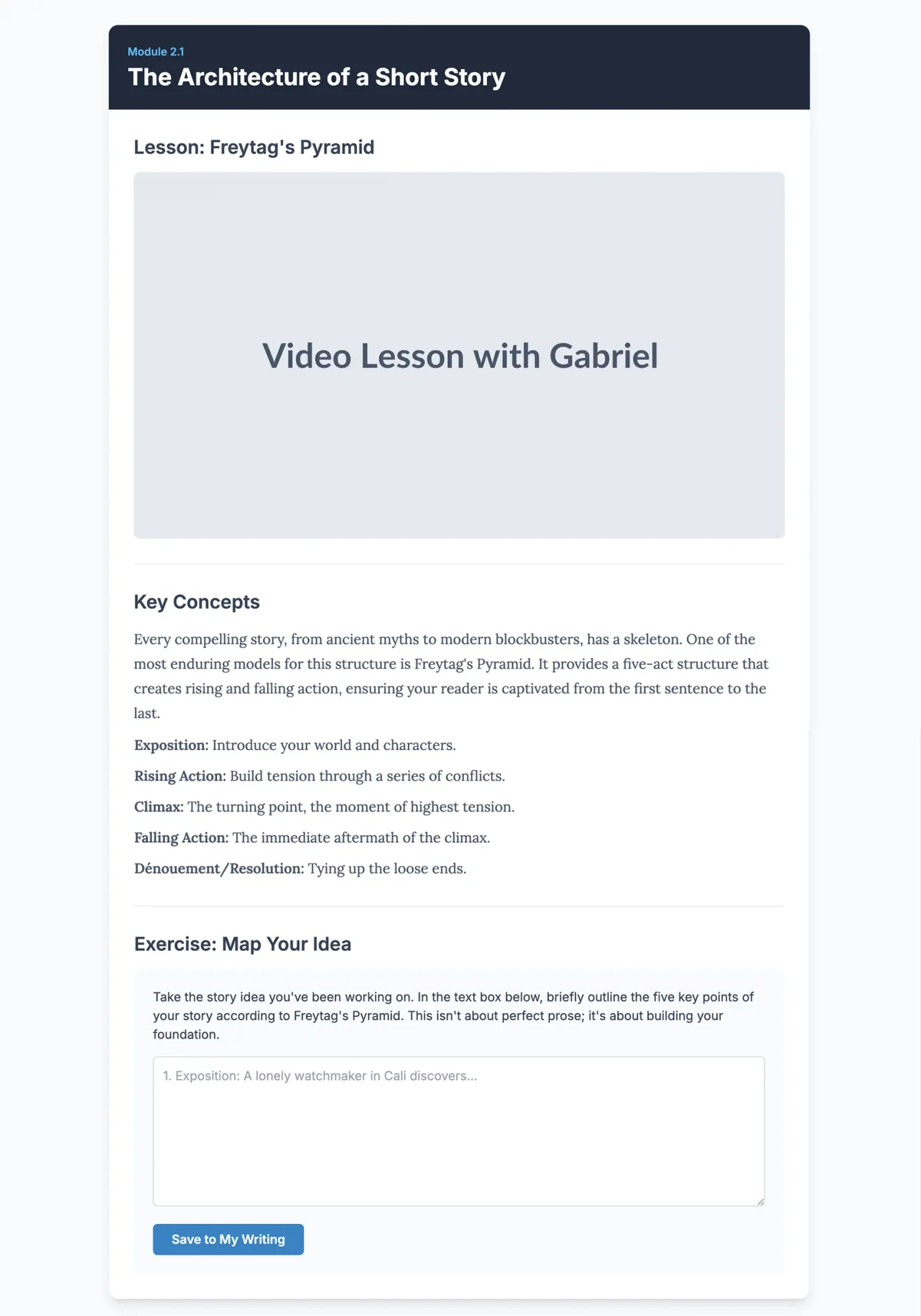
Content was the product. I broke Gabriel’s curriculum into short modules and replaced grades with Compass for Growth: a self-assessment combined with peer and mentor feedback on specific craft elements — dialogue, pacing, character — instead of a score.
03 Experience
Low cognitive load, high creative flow.
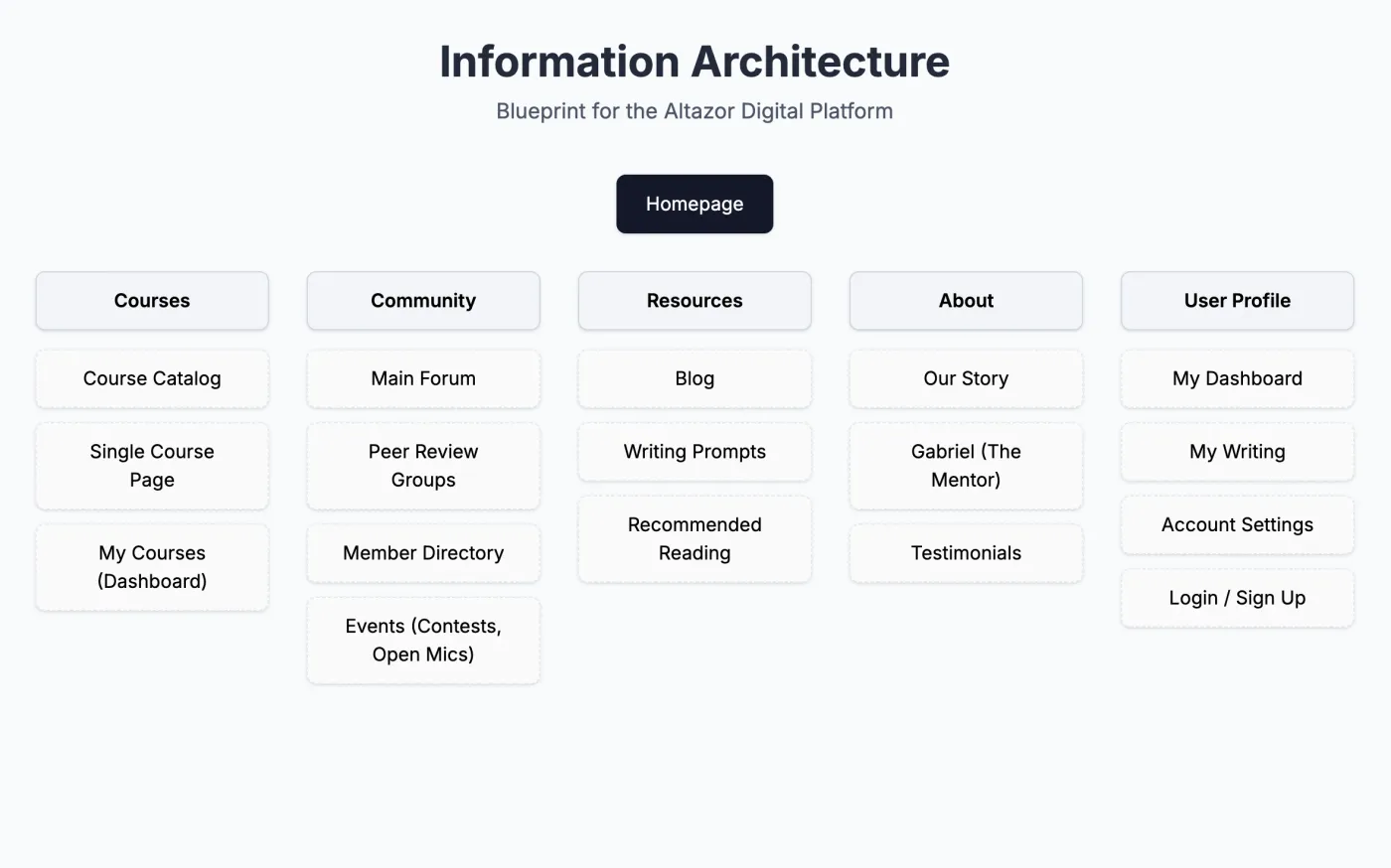
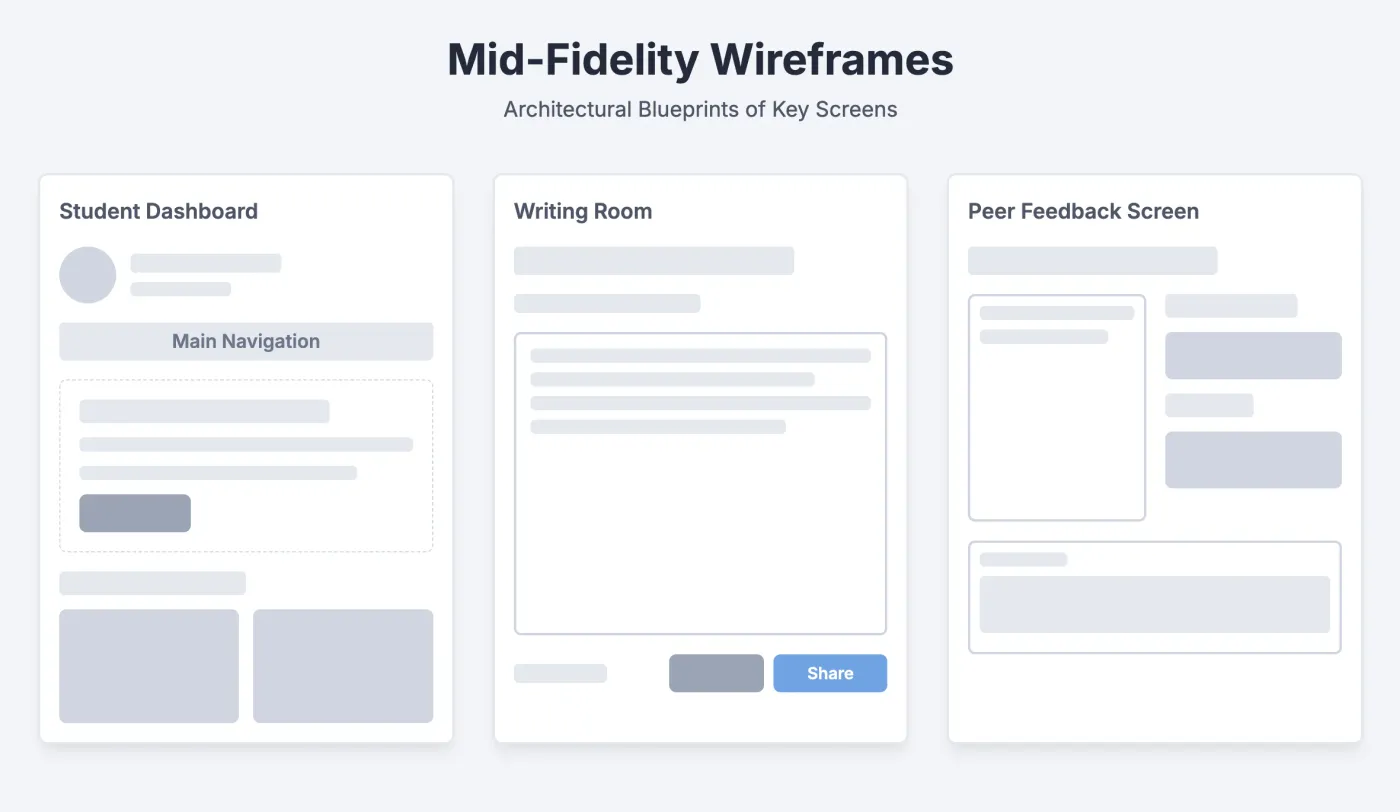
I mapped the platform, then tested paper and low-fidelity prototypes with people who matched the personas. One example: the first enrolment flow was too long, so it became a single page to stop drop-off.
Visually, I defined a palette inspired by Cali’s sunsets and pen ink, a legible type system and a 4 px spacing scale — already abstracted into design tokens, so the platform could be themed for new initiatives later.
04 The pivot
Listening meant cutting my own work.
After the first two workshops the data was clear: students preferred Google Classroom — which they already knew — for lessons and assignments over a custom learning space. So we moved course content, feedback, text corrections and audio notes to Classroom, where Gabriel and other mentors could respond faster.
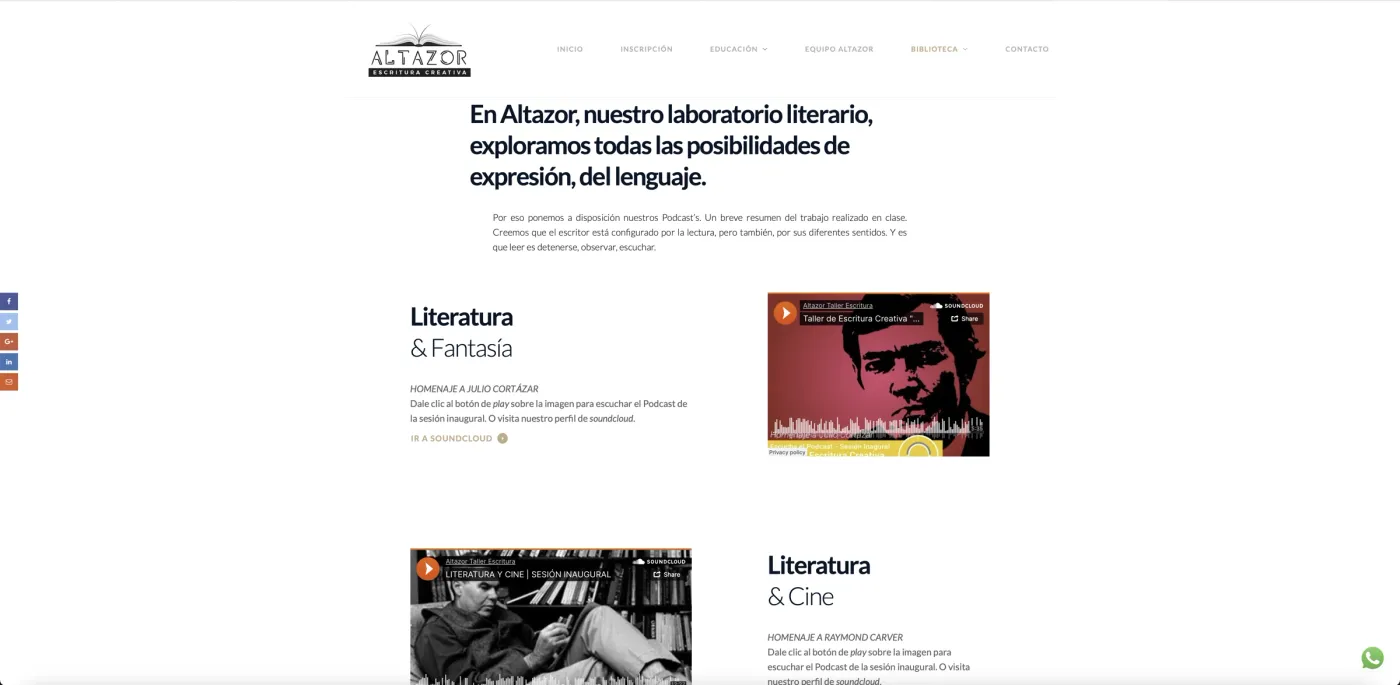
The website kept what only it could do well: enrolment and payments, the blog, events and contests. It was the right call for students, even though it shelved part of the design.
Beyond the screens, we built community offline too: a celebration at a local library, discounts with independent bookstores, and a year-end event that led to a student anthology.
05 Today
What success created.
Altazor now runs around ten workshops a year, plus master classes, free classes, events and Instagram lives, with students across Colombia and other Spanish-speaking countries.
Growth brought a new problem: Gabriel runs all of it by hand, across WhatsApp groups, Classroom and payment apps. That’s the next project.